How Integrated Business Systems Give MSME Owners Better Control and Visibility
How Integrated Business Systems Give MSME Owners Better Control and Visibility
Most MSME owners don't want more software. They want one reliable answer to a simple question: How is my business really doing right now?
The frustration is rarely a lack of information. Instead, important business data exists in multiple places, across different spreadsheets, software platforms, and departments. Getting a clear answer often means contacting several people and reconciling different reports.
Integrated business systems address this challenge by connecting essential business functions and providing a more consistent view of performance.
What Better Business Visibility Actually Changes
When sales, finance, operations, and relevant workforce information are connected, business owners can spend less time collecting updates and more time making informed decisions.
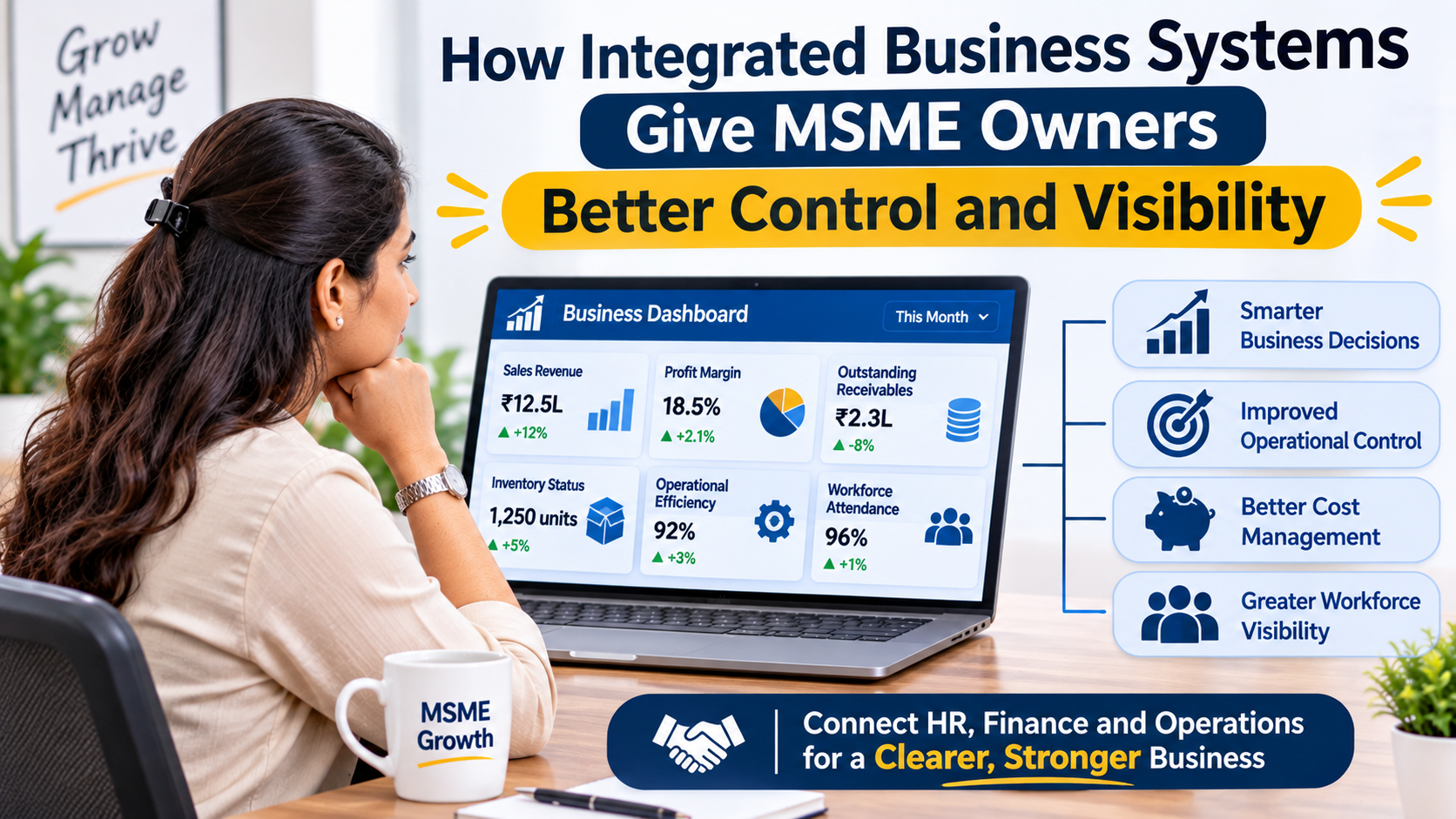
1. Better Sales Decisions
Revenue alone does not tell the complete story. Business owners need visibility into margins by customer, product, or service to understand which sales activities are genuinely profitable.
Connected information helps identify profitable opportunities and highlights situations where increasing revenue does not necessarily translate into better returns.
2. More Informed Cost Decisions
Understanding overall expenses is important, but knowing what drives those expenses is even more valuable.
Connected financial and operational information helps owners examine costs against the activities responsible for generating them, making it easier to identify inefficiencies and opportunities for improvement.
3. Improved Operational Control
Production capacity, output, delivery schedules, and operational bottlenecks need regular monitoring.
When operational information is available in a connected system, owners can identify delays and capacity constraints earlier instead of discovering problems after customers have already been affected.
4. Better Workforce Visibility
Workforce availability, attendance, and relevant productivity information can provide additional context when reviewing business performance.
Connecting workforce information with operational requirements helps management understand whether staffing levels and available capacity support current business commitments.
From Information Gathering to Decision-Making
One of the biggest benefits of integrated business systems is the change they bring to an owner's daily responsibilities.
In many MSMEs, owners spend considerable time chasing updates, checking spreadsheets, comparing reports, and resolving conflicting numbers.
Every hour spent assembling information is an hour that could otherwise be used for strategic planning, customer relationships, operational improvements, and business growth.
Integrated systems help shift the owner's role from information gatherer to decision-maker.
Visibility Is the Starting Point, Not the Solution
Having access to better information does not automatically fix business problems. It simply makes those problems easier to identify and understand.
You cannot effectively address a declining profit margin if you cannot see where it is happening. You cannot resolve a capacity constraint if you do not know it exists. And you cannot hold process owners accountable for outcomes that are not being measured.
Visibility creates the foundation for better accountability, stronger processes, and continuous improvement.
Start With Five or Six Numbers That Matter
Before selecting new software or investing in another dashboard, identify the five or six business indicators you wish you could access instantly.
For many MSMEs, these might include:
- Revenue and sales margins: How much are we earning, and how profitable are our sales?
- Outstanding receivables: How much money are customers yet to pay?
- Operating expenses: Where is the business spending its money?
- Inventory position: What stock is available, moving slowly, or running low?
- Operational performance: Are production, delivery, and service targets being achieved?
- Workforce availability: Do we have the people and capacity needed to meet business requirements?
Next, examine why these numbers are difficult to access today. Are they spread across different systems? Do employees manually compile reports? Is information delayed or inconsistent?
These gaps often reveal where integration can deliver the greatest immediate value.
Focus on Useful Metrics, Not More Dashboards
More reports and more metrics do not automatically lead to better management.
A dashboard filled with numbers that nobody regularly reviews is simply another form of information overload.
The objective should be to establish a small, meaningful set of indicators that genuinely influence business decisions. Review them consistently and ensure that the right people are accountable for responding when performance changes.
Final Thoughts
Integrated business systems are not valuable simply because they bring multiple functions onto one platform. Their real value lies in helping business owners understand what is happening across the organisation without spending hours collecting and reconciling information.
Better visibility supports faster decisions, improved accountability, and greater operational control.
The goal is not to have the most sophisticated dashboard. It is to have the right information available at the right time so that every important business decision is based on facts rather than guesswork.
Start by listing the five numbers you need without asking anyone. That simple exercise can reveal where your business needs better integration and visibility.